| Scuba Diving Pictures Main Page |
|
|
 Alberthead
Lagoon in Metchosin, B.C.
Alberthead
Lagoon in Metchosin, B.C. Bear Cove in Port Hardy, B.C. Bob's Spot in the Plumper Island Group, B.C. Braemar Ave in North Saanich, B.C. Breakwater Island near Gabriola Pass, B.C. Browning Passage near Port Hardy, B.C. Browning Wall near Port Hardy, B.C. China Creek near Port Alberni, B.C. Clover Point in Victoria, B.C. Copper Cliffs near Campbell River, B.C. Daphne Islet near Brentwood Bay Deep Cove near Sidney, B.C. Discovery Island near Victoria, B.C. Dolphin Beach near Nanoose Bay, B.C. Elliot's Beach Park in Ladysmith, B.C. Five Fathom near Port Hardy, B.C. Forest Island (north end) near Sidney, B.C. GB Church [ship to reef] near Sidney, B.C. Gowland Point on South Pender Island, B.C. Henderson Point near Sidney, B.C. Madrona Point in Nanaimo, B.C. Maple Bay near Duncan, B.C. McKenzie Bight near Victoria, B.C. McNeill Point aka Kitty Islet in Victoria, B.C. Neck Point in Nanaimo, B.C. Northeast Pearse Wall, Telegraph Cove, B.C. Ogden Point in Victoria, B.C. Porteau Cove Marine Park, B.C. Port McNeil, B.C. Rocky Point in Nanaimo, B.C. Row & Be Damned near Campbell River, B.C. Saltery Bay near Powell River,B.C. Saxe Point in Esquimalt, B.C. Sidney, B.C. Ten Mile Point in Victoria, B.C. Wall Beach near Nanoose Bay, B.C. Whytecliff Park near Vancouver, B.C. Willis Point near Sidney, B.C. International Kailua-Kona on the Big Island of Hawaii, USA Kaui - an Island of Hawaii, USA Aquatic but Non-Marine Life Vancouver Island, B.C. |
Scuba Diving
Pictures from Ten Mile Point
in Victoria, B.C., Canada These are medium quality jpegs. But I have the RAW images as well. Email tjfidler@telus.net Directions to this dive site can be found at the bottom of this page. Type of dive: Can be done as a shore dive but recommend doing this as a boat dive. Rating for this dive site: 7/10 due to the problem of current here, but a great abundance of life Parking: maybe parking for 8 cars at both proper Ten Mile Point and Spring Bay Bathroom/Washroom/Toilet: Not on site. Boat ramp: none Ease of entry: 5/10 for Ten Mile Point but 9/10 for Spring Bay [Wheel chair access: No] Abundance of life: 9/10 as one of the most populated places due to the current Accommodations: There are several places in Victoria that you could find lodging at. Including Hotels, Motels, Inns and Bed & Breakfasts. Attractions: lots of hermit crabs even away from the wall, lots of starfish feeding on clams, Bottom and depth: sandy away from wall, solid rock wall with rock debris at bottom Facilities: none Hazards/Obstacles: Current is almost always a hazard here. Some protection at Spring Bay side but not at the wall. Sensitivity to tide/current: Very high current area. Terrain: rocky areas, sandy bottom, solid rock walls abundant in life Tides, transportation and weather: Fisheries and Oceans Canada Tide Page., BC Ferries Schedule and Sailings. , The Weather Network
Just clicking on the ads helps pay for the web site. |
The following images are thumbnails. If you click on them a larger image will open up and the picture will take up most of your screen. Again these are medium qualifty jpegs. Higher quality images can be purchased directly from me via paypal using my email address tjfidler@telus.net And many of these photos can be found for sale on Cafepress through the Calendar link and Photo CD link. As well some of these can be found as posters via Cafepress, and some of these ocean life photographs are available as widescreen backgrounds via the widescreen link immediately below some of the photographs.
A few people have already asked me about "What is that pink stuff on the rocks in some of the pictures?" Well, they're usually Pink Rock Crust (aka Encrusting Coralline Algae) or in some cases might even be Encrusting Hydrocorals. They're eaten by a variety of animals - apparently as a good source of calcium.
Ten Mile Point has more Sea Anemones and Sponges than I've ever seen any where before. This is due to the currents at this location. This is a very dangerous place to dive. Use Extreme Caution.
 |
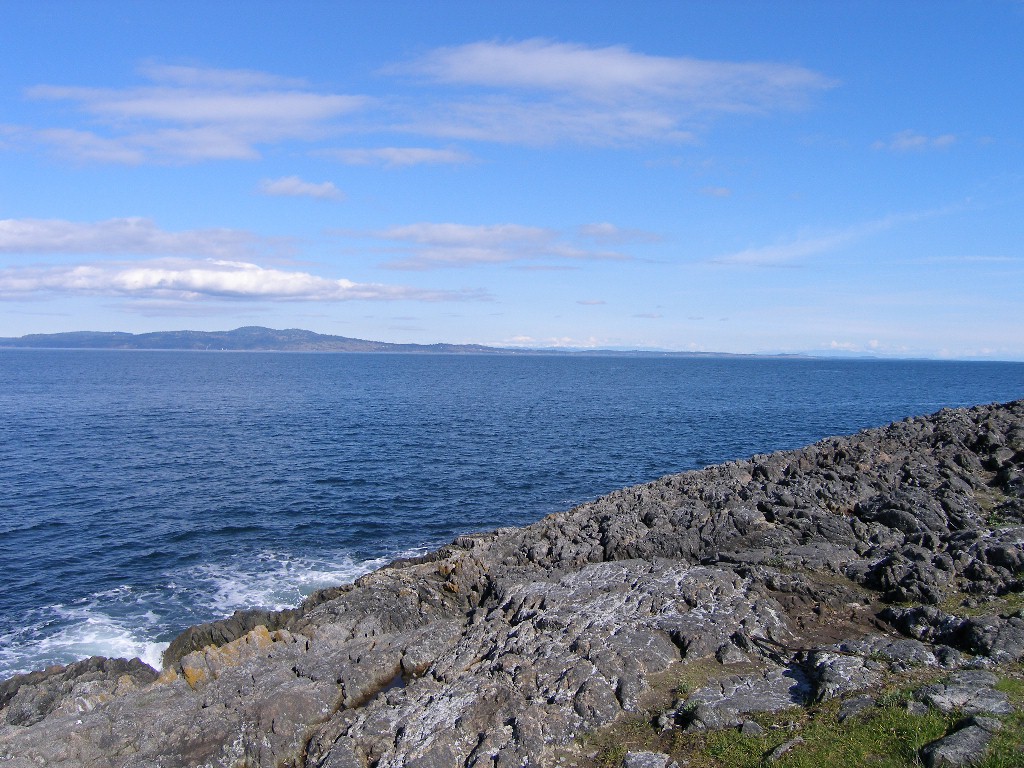 |
| Ten Mile Point parking lot |
Ten Mile Point proper - very
tricky getting into the water here. |
 |
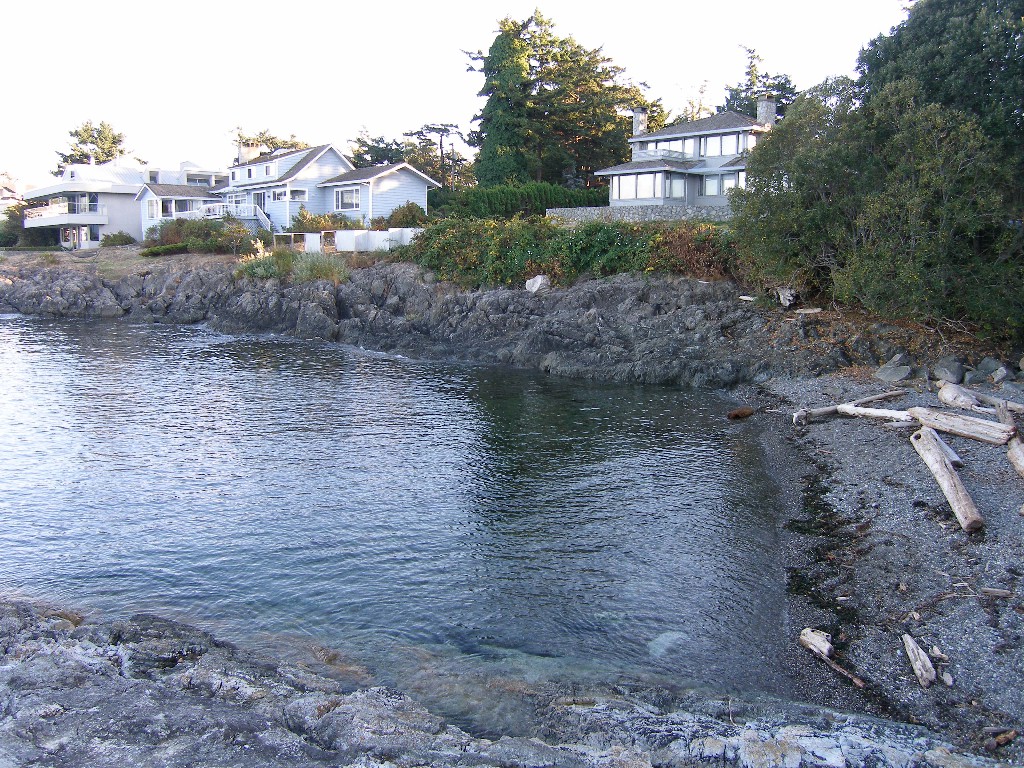 |
| Spring Bay parking lot |
Spring Bay - very easy getting
into the water here. |
 |
|
| A view of Ten Mile Point from
Spring Bay. Only about a ten minute swim. And often there is lots of stuff to see in the shallows. |
Crustaceans
 |
 |
| Bering Hermit Crab ~ about 5 inches [12.5 cm] wide on the
shell. They are quite common at this dive location. (Sept 10, 2006) |
Bering Hermit Crab - same
hermit crab now part way out of its shell. (Sept 10, 2006) |
 |
 |
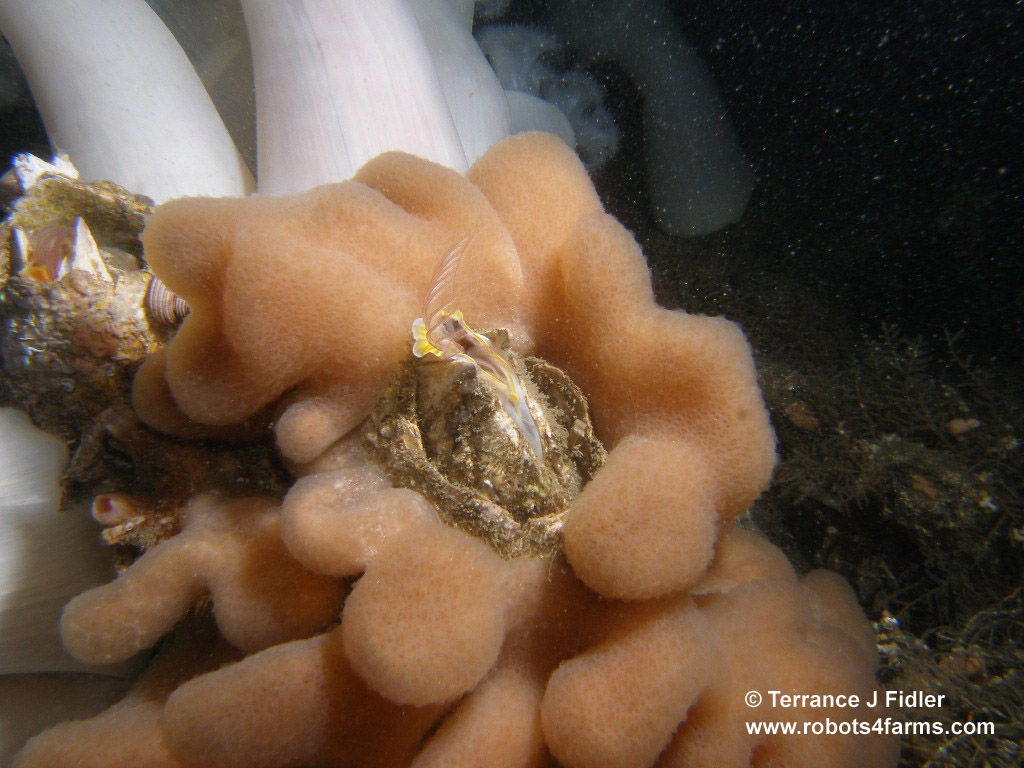
| Giant Acorn Barnacle surrounded
by Lobed Compound Tunicates. The barnacles are very common at this site. (April 1, 2007) |
Decorator Crab [most of the
image]. Very common at this dive site. (Sept 10, 2006) |
 |
 |
| Widehand Hermit Crab ~ about 4
inches [10 cm] across the shell. (April 1,
2007) |
Northern Kelp Crab ~ about12
inches [30 cm] with legs and claws. (Sept 10,
2006) |
 |
 |
| Red Rock Crab ~ about ten inches
[25 cm] wide. (Sept 10, 2006) |
A few Coonstriped Shrimp
[Spirontocaris holmesi]
checking out
a dead crab. Less than 3 inches [7.5 cm] long. Also note the sculpin in the background. (Sept 10, 2006) |
 |
 |
| Sharp Nosed Crab [Scyra
acutifrons] on Lobed
Compound Tunicates (April 1, 2007) |
Two Bering Hermit Crabs fighting
over homes (April 5, 2007) |
 |
 |
| Widehand Hermit Crab ~ about 6
inches [15 cm] wide. This photograph is also found on one of the 2009 Calendars.Quite common here. (April 5, 2007) |
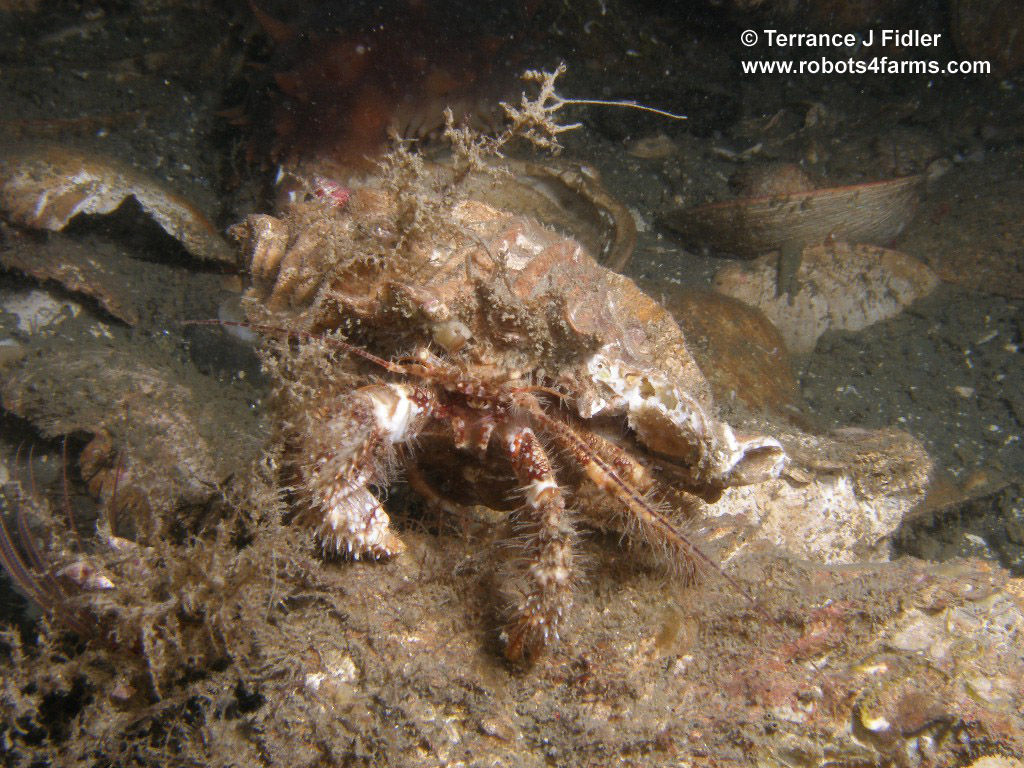
Hairy Hermit Crab or a Bluespine
Hermit Crab [Not sure] ~ 6 inches [15 cm] across the shell. This image is also found on one of the 2009 Calendars. Not that common here. (April 5, 2007) |
 |
 |
| Butterfly Crab [Cryptolithodes
typicus] ~ about 2
inches [5 cm] wide. Spotted a few this day, but not the easiest animal to get a decent photo of. (April 5, 2009) |
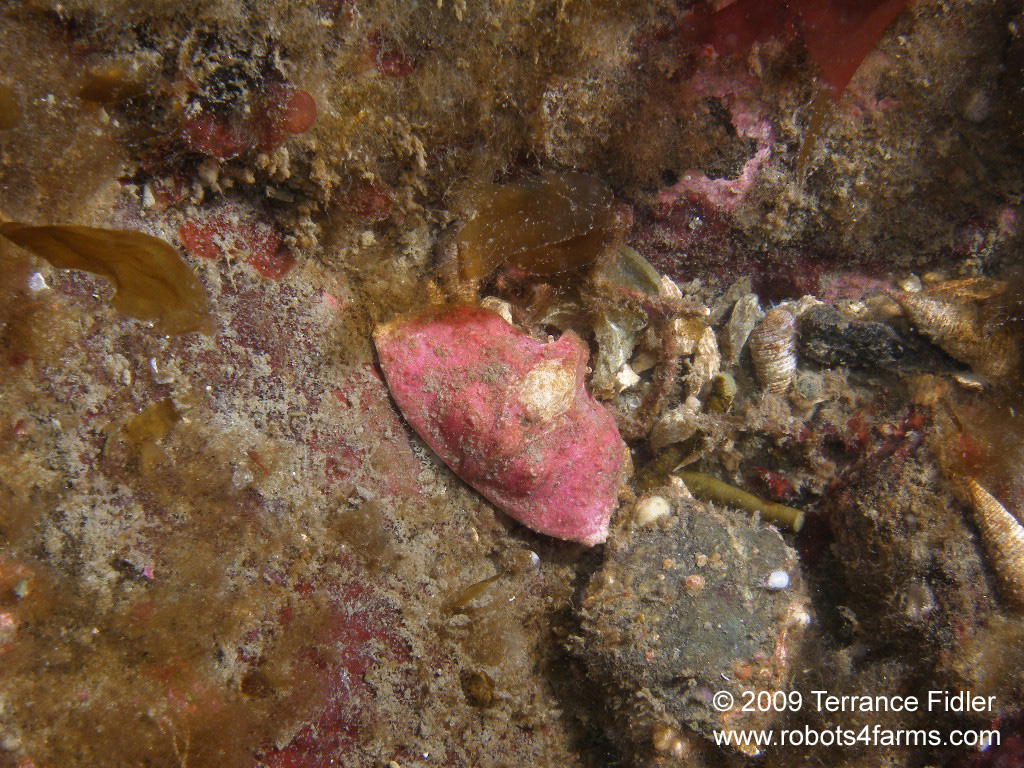
Heart Crab [Phyllolithodes
papillosus] [missing some legs] ~
about 6 inches [15 cm] across its carapace.(April 5, 2007) I ran into this same animal on Apr 5, 2009. Its legs are coming back although they are small. I should have taken a picture, but the fishing line beside it made me stop. |
 |
 |
| Red Rock Crab ~ about 8 inches
[20 cm] wide. Its quite common to find them slightly buried in the sand. As if they are hiding or were digging for food. (April 5, 2007) |
Red Rock Crab - same crab as in image to left, now running away. (April 5, 2007) |
 |
 |
| Sharp Nosed Crab [Scyra
acutifrons] ~ 6 inches [15
cm] long.
Quite common at this dive site and its normal to find them with other lifeforms like lobe tunicates on them. (Sept 2009) |
Decorator Crab ~ 4 inches [10
cm] wide with its arms included. (April 5, 2007) |
 |
 |
| Cancer Crab aka Pygmy Rock Crab
[Cancer oregonensis] inside of the shell
of a dead Giant Acorn Barnacle. About 4 inches [10 cm] at the opening of this "shell". (Sept 14, 2008) |
Moss Crab [Loxorhynchus
crispatus] sitting on the leg of
a Leather Star [see star fish images for related image] About two inches [5 cm] across its carapace. (Sept 14, 2008) |
 |
 |
| Giant Acorn Barnacle ~ 3 inches
[7.5 cm] wide for just its opening feeding "arms." (April 5, 2009) |
Giant Acorn Barnacle ~ 4 inches
[10 cm] in diameter. Can you guess what the long pinkish tube is that is sticking out of its body, and heading off in the top left direction of this image? (April 5, 2009) |
 |
|
| Heart Crab [Phyllolithodes
papillosus] ~ 2 inches [5 cm]
wide. This is a young one. They get up to 4-5 inches across the main shell. (April 5, 2009) |
This is just a short video
showing you how the Giant Acorn Barnacles eat. Which is by using their "feet" to capture particles out of the water. (Sept 2009) |
 |
 |
| Puget Sound King Crab
[Lopholithodes mandtii] (juvenile)
~ 2 inches [5 cm] wide and a Heart Crab [Phyllolithodes papillosus] ~ 4 inches [10 cm] widel. |
Common Barnacle found along the
shore and exposed at low tide. ~ 1 inch [2.5 cm] across. |
Back to top.
Fish
 |
 |
| Sculpin sitting on a Gumboot chiton. And a small hermit crab.
~ 2 inches [5 cm] long. (Sept 10, 2006) |
Copper Rockfish [Sebastes
caurinus] ~ 16 inches [40
cm] long. Common at this scuba diving site. (April 1, 2007) |
 |
 |
| Copper Rockfish [Sebastes
caurinus] ~ 14 inches [35
cm] long. (Sept 10, 2006) |
Ling Cod (juvenile) ~ 3 feet [1
m] long. Quite common at this dive site. (April 1, 2007) |
 |
 |
| Buffalo Sculpin ~ 14 inches [35
cm] long. Common at this scuba dive site. (April 1, 2007) |
Painted Greenling ~ 12 inches
[30 cm] long. Note a very good digital image, but it was the best one I was able to take of this fish. (April 5, 2007) |
 |
 |
| Grunt Sculpin ~ 4 inches [10 cm]
long. Common at this dive site. (May 13, 2007) |
Grunt Sculpin (May 13, 2007) |
 |
 |
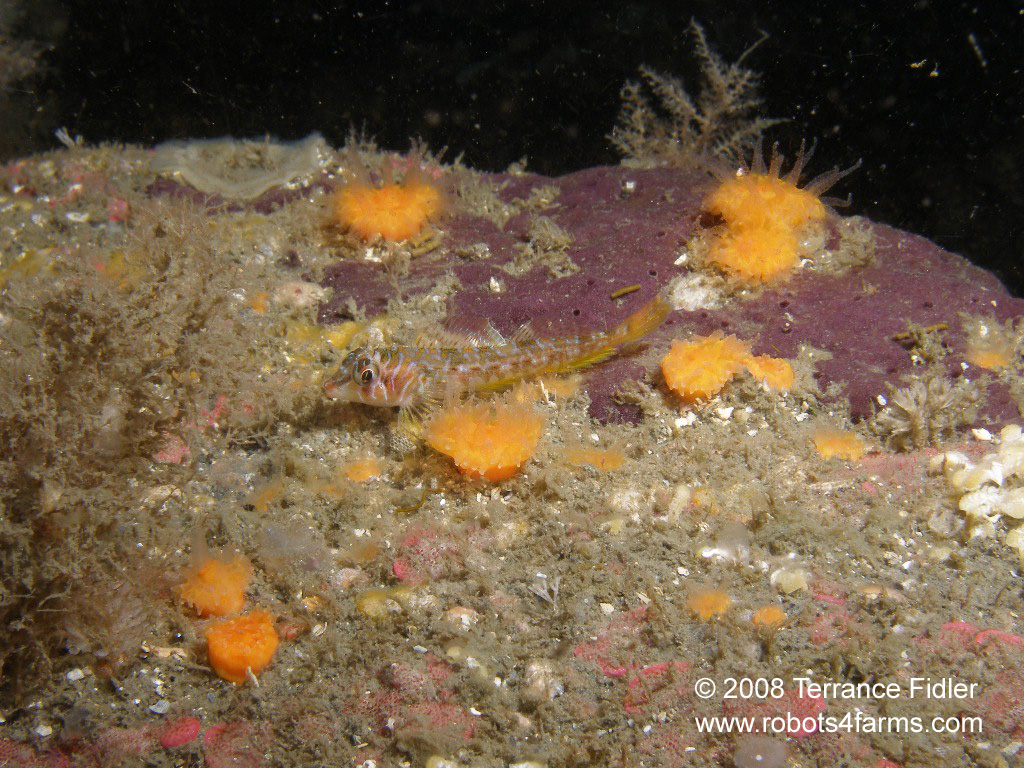
| Buffalo Sculpin ~ about 12 inches [30 cm] long. (Sept 14, 2008) | A baby Buffalo Sculpin in the
shallows. A lot more debris floating in the water... so a lot more back scatter than I like. (Sept 14, 2008) |
 |
 |
| A baby Longfin Sculpin. ~ 2
inches [5 cm] long. And a few Orange Cup Corals. (Sept 14, 2008) |
Longfin Sculpin ~ 3 inches [7.5 cm] long. (April 5, 2009) |
 |
 |
| Scalyhead Sculpin ~ 5 inches
[12.5 cm] long. Frequently seen at this scuba diving site. Note the shrimp in the back ground. |
Quillback Rockfish [Sebastes
maliger] ~ 12 inches
[30 cm] long. Common at this scuba diving site. This one was located along one of the crevices along the wall near the large group of giant Plumose Anemones. |
 |
 |
| Red Irish Lord [Hemilepidotus
hemilepidotus] ~ 18 inches [45
cm] long. This is the pinkest Red Irish Lord fish that I have ever spotted. I have a couple of better close up shots of this fish. |
Copper Rockfish [Sebastes
caurinus] ~ 16 inches [40
cm] long. And beside it a Scalyhead Sculpin. I was taking a picture of the sculpin and the rockfish came and sat in front of the camera. I was quite surprised by this. I ended up taking 4 pictures of it. |
| |
|
| Video of Black Rockfish ~ 16
inches [40 cm] long. No still images as they don't stay still long enough and water quality too poor for a strobe. |
Video image of Copper Rockfish ~
16 inches [40 cm] long. Just swimming around. |
Back to top.
Mollusks
 |
 |
| Rock Scallop ~ about 12 inches
[30 cm] across. (April 1, 2007) |
Rock Scallop ~ about 12 inches [30 cm] across. (April 1, 2007) |
 |
 |
| Gumboot Chiton [see fish for
close up of Sculpin on its back] ~ 12 inches [30 cm] long. Very common here. (Sept 10, 2006) |
Rock Scallop ~ about 12 inches
[30 cm] across. Very common here. (April 5, 2007) |
 |
 |
| Blue Lined Chiton ~ 2 inches [5
cm] long. My camera does not allow me to get much closer and still get a good picture. Or at least not quickly. However, under- water time is usually against me. (April 5, 2009) |
Keyhole Limpet ~ 2 inches [5 cm]
in diameter. Note the small Chiton on top of it. (April 5, 2009) |
Back to top.
Nudibranchs or Sea Slugs
 |
 |
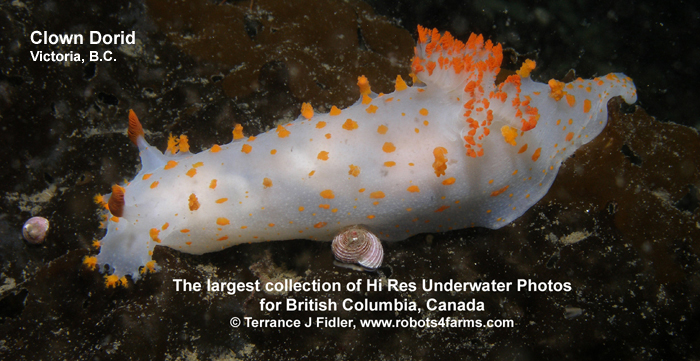
| Clown Dorid [Triopha catalinae] ~ about 4 inches [10 cm]
long. Very common here. (April 1, 2007) |
Giant White Dorid ~ about 5
inches [12.5 cm] long. Not that common here. (April 1, 2007) |
 |
 |
| White Lined Dirona ~ about 5
inches [12.5 cm] long. (April 1,
2007) |
Clown Dorid [Triopha catalinae]
~ about 6 inches
[15 cm] long. (April 5, 2007) |
 |
 |
| A Lemon Dorid [Doris
montereyensis] on sponge. ~ about
6 inches [15 cm] long. (April 5, 2009) |
Cockerell's Dorid [Laila cockerelli] ~ 2 inches [5 cm] long. (April 5, 2009) |
 |
|
| Hudson's Dorid ( I believe ) ~ 2
inches [5 cm] long. (April 5, 2009) |
Back to top.
Sea Anemones & others ( Cnidarians )
 |
 |
| Anemones - the wall here is well
covered or populated by these and the Giant Plumose Anemones. These are at most only about 12 inches [30 cm] in width. (April 1, 2007) |
Giant Plumose Anemones ~ over
two feet [60 cm] tall. With some type of colonial tunicates at their base - the brown stuff, and a couple of Giant Acorn Barnacles. Ten Mile Point has huge numbers of these animals. (April 1, 2007) |
 |
 |
| Zoanthids and Creeping Petal Sea
Cucumbers (April 5, 2007) |
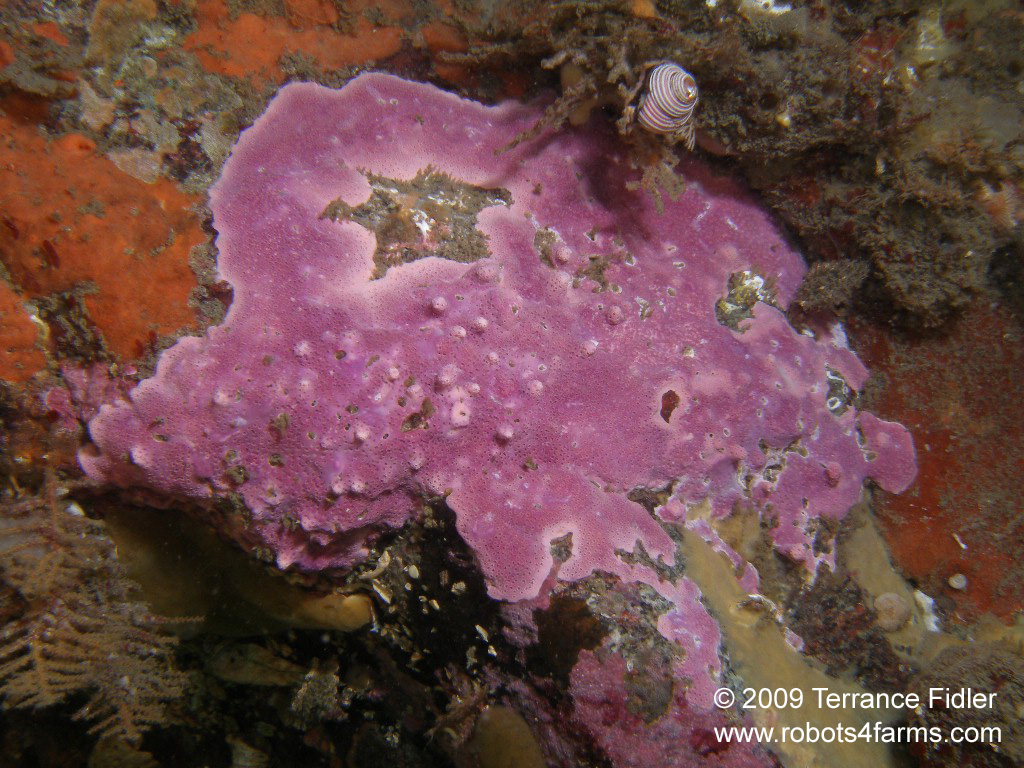
Purple Encrusting Hydrocoral ~ 12 inches [30 cm] wide. (April 5, 2009) |
 |
 |
| Pink Encrusting Hydrocoral ~ 6
inches [15 cm] tall. The normal flat variety. (April 5, 2009) |
Pink Encrusting Hydrocoral ~ 4
inches [10 cm] wide. Note that it is beginning to grow "spikes." (April 5, 2009) |
 |
|
| Pink Encrusting Hydrocoral ~ 16
inches [40 cm] wide. Much more "spike" growth on this one. Hopefully it will become more "tree-like" making it even more beautiful. (April 5, 2009) |
This video gives you an idea of
the number of Giant Plumose Anemones at the wall at Ten Mile Point. It starts at about a depth of 35 feet and extends down to about 85 feet. [Plus or minus the height of the tide at the time.] |
 |
|
| Pink Tipped Anemones ~ 3 inches
[7.5 cm] for the larger ones. There were more of these animals here then I've ever seen before. On my way back from the point I was swimming along the shore to Spring Bay and I saw thousands of them. |
Back to top.
Sea Cucumbers & Starfish ( Echinoderms )
 |
 |
| Red Sea Urchin ~ about 12 inches
[30 cm] wide. (Sept 10, 2006) |
Mottled Star ~ about 2 feet [60
cm] across. (Sept 10, 2006) |
 |
 |
| Blood Star and a Clown Dorid
(April 1, 2007) |
Ochre Star [Not sure what it is
doing? Itchy?] (April 1, 2007) |
 |
 |
| Sunflower Star being touched by
a Painted Star (April 1, 2007) |
Painted Star (April 1, 2007) |
 |
 |
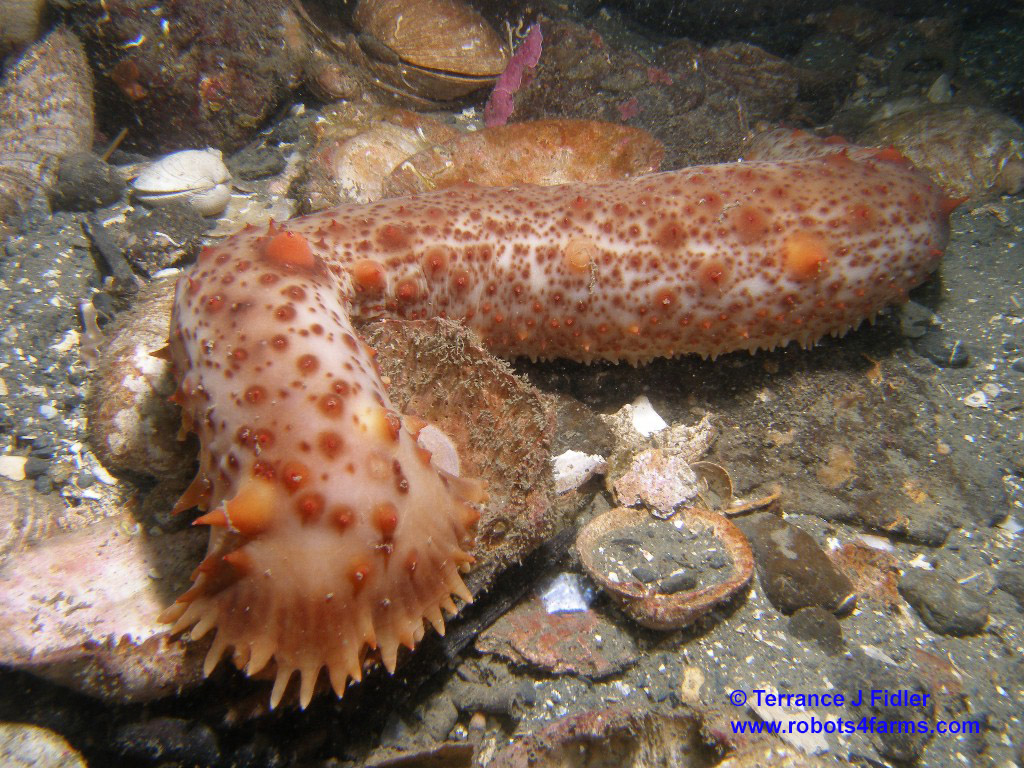
| Sea Cucumber ~ less than 2 feet
[60 cm] long. (April 1, 2007) |
A young Sunflower Star ~ about
16 inches [40 cm] across. (April 1,
2007) |
 |
 |
| A young Purple Sea Urchin ~
about 5 inches [12.5 cm] wide.(April
5, 2007) |
Sea Cucumber ~ about 2 feet [60
cm] long. (April 5, 2007) |
 |
 |
| A young White Sea Cucumber
hiding in behind some lobed tunicates. (April 5, 2007) |
Sunflower Star eating something
~ 3 feet [1 metre] wide. Very common here. (April 5, 2007) |
 |
 |
| Leather Star with a Moss Crab
sitting on one of its legs. This seems to be a fairly common even. I often notice crabs sitting on starfish. And the starfish can actually be active and on the move. Which might not sound like much but the Sunflower Starfish move reasonable fast. Like a turtle walking for their more common speed, and a turtle running for their top speed. (Sept 14, 2008) |
A young White Sea Cumber hiding
behind what appears to be colonial tunicates. Same situation as the picture above and to the left. Quite common here. (Sept 14, 2008) |
 |
 |
| A close up of a Creeping Petal
Sea Cucumber. ~ about 4 inches [10 cm] across. Note that it has one of its arms in its mouth. They "lick" of the food of their arms. One part I love about photography is seeing the animals you have pictures of that you did not see when taking the picture. In this image there are two baby hermit crabs and what could be a baby Sharp Nosed Crab. (Sept 14, 2008) |
Blood Star ~ 8 inches [20 cm]
across. Note the nudibranch below it. Common at this dive site. (April 5, 2009) |
 |
 |
| Green Sea Urchin ~ 3 inches [7.5
cm] in diameter. Note the larger Red Sea Urchin behind it. (April 5, 2009) |
Orange Sea Cucmber ~ 12 inches [30 cm] in diameter. (April 5, 2009) |
 |
 |
| Sea Cucumber [juvenile] ~ 3
inches [7.5 cm] long. The adults are very common here. (April 5, 2009) |
Striped Sunstar ~ 4 inches [10
cm] in diameter. The smallest I've ever seen. They can get up to 3 feet [1 m] in diameter. And until now the smallest I had seen was about a foot [30 cm] in diameter. (April 5, 2009) |
 |
|
| Sunflower Star ~ 14 inches [35
cm] across the main mass here. Probably normal sized, but for some reason a few this day seemed to be curled up this way. Itchy? (April 5, 2009) |
A video of an Orange Sea
Cucumber feeding. Note how it basically sticks its fingers in its mouth to clean off the particles it has caught. |
 |
|
| Striped Sun Star ~ 2 feet [60
cm] across. Not the usual orange coloured ones. |
Back to top.
Sponges & Bryozoans
 |
 |
| Sponge of some kind. Common enough here. (April 1, 2007) | Another kind of sponge. More rounded. Not in my books. (Sept 14, 2008) |
 |
 |
| The yellow tree like thing is a
Northern Staghorn Bryozoan ~ about 5 inches [12.5 cm] across. (April 5, 2007) |
Rosy Bryozoan ~ 8 inches [20 cm]
across. Common at the wall at this dive site. They are the reddish coloured mass in the middle of this digital image. |
Back to top.
Tunicates
 |
 |
| Shiny Orange Sea Squirt ~ about
5 inches [12.5 cm] wide. (Sept
10, 2006) |
Shiny Orange Sea Squirts and a
Longfin Sculpin on the left (Sept
10, 2006) |
 |
 |
| Red Ascidians or Compound
Tunicates? The orange blob structure.(April 5 2007) |
Lobed Compound Tunicates surrounding Giant Acorn Barnacles (April 1, 2007) |
 |
|
| Some type of Lobed Compound Tunicates. ~ 8 inches [20 cm] tall. (April 5, 2009) |
Back to top.
Worms
 |
 |
| Calcareous Tube Worms and a
Sharp Nosed Crab (April 1, 2007) |
Calcareous Tube Worms surrounded
by Hairy Triton [a snail] eggs. (April 5, 2007) Note this is also my first picture of Pink Encrusting Hydrocorals. |
 |
 |
| Another close up of Calcareous
Tube worms. ~ widest about 2 inches [5 cm] Its hard to get a picture of these feeding. They usually hide when they detect me which means pulling back into their calcified tubes.(Sept 14, 2008) |
Spaghetti Worm, well at least
its "tentacles". These actually belong to a worm that has most of its body hidden below the sand. (April 5, 2009) |
Back to top.
Miscellaneous
 |
 |
| Moss Crab [left], Sponge and
White Sea Cucumber [right] (April 5, 2007) |
A mixture of a few animals.
Blood Starfish, Butterfly Crabs, and a Spiny Nosed Sculpin.(April 5, 2009) |
 |
 |
| Bull Kelp ~ 2 feet [60 cm] from
the ball to the "stem" as it ends in the photo. But these plants grow well past 45 feet [15 metres]. (April 5, 2009) |
Featherboa Kelp ~ about 18
inches [45 cm] worth in this image. They seem to get to be around 10 feet [3 m] in length from what I've seen. (April 5, 2009) |
 |
 |
| Sea Sacs ~ 5 inches [12.5 cm]
tall. Common in the shallows closer to Spring Bay. Earlier in the season they are usually more green in color. |
Sea Sacs ~ 5 inches [12.5 cm]
tall. next to some Rock Weed[?]. An air sack at the top of the Sea Sac keeps them standing upright. |
Back to top.
If you want to locate this site on a map, or print out a map, you can user either:
Google Maps: coming soon
Or
MapQuest: coming soon