| Scuba Diving Pictures Main Page |
If you like these pages, and wish this web site to continue, please remember to check out some of the Google Ads.
Just clicking on them helps pay for the web site. Currently my Google ads are not making enough money to pay for this web space.
 Alberthead
Lagoon in Metchosin, B.C.
Alberthead
Lagoon in Metchosin, B.C. Bear Cove in Port Hardy, B.C. Bob's Spot in the Plumper Island Group, B.C. Braemar Ave in North Saanich, B.C. Breakwater Island near Gabriola Pass, B.C. Browning Passage near Port Hardy, B.C. Browning Wall near Port Hardy, B.C. China Creek near Port Alberni, B.C. Clover Point in Victoria, B.C. Copper Cliffs near Campbell River, B.C. Daphne Islet near Brentwood Bay Deep Cove near Sidney, B.C. Discovery Island near Victoria, B.C. Dolphin Beach near Nanoose Bay, B.C. Elliot's Beach Park in Ladysmith, B.C. Five Fathom near Port Hardy, B.C. Forest Island (north end) near Sidney, B.C. GB Church [ship to reef] near Sidney, B.C. Gowland Point on South Pender Island, B.C. Henderson Point near Sidney, B.C. Madrona Point in Nanaimo, B.C. Maple Bay near Duncan, B.C. McKenzie Bight near Victoria, B.C. McNeill Point aka Kitty Islet in Victoria, B.C. Neck Point in Nanaimo, B.C. Northeast Pearse Wall, Telegraph Cove, B.C. Ogden Point in Victoria, B.C. Porteau Cove Marine Park, B.C. Port McNeil, B.C. Rocky Point in Nanaimo, B.C. Row & Be Damned near Campbell River, B.C. Saltery Bay near Powell River,B.C. Saxe Point in Esquimalt, B.C. Sidney, B.C. Ten Mile Point in Victoria, B.C. Wall Beach near Nanoose Bay, B.C. Whytecliff Park near Vancouver, B.C. Willis Point near Sidney, B.C. International Kailua-Kona on the Big Island of Hawaii, USA Kaui - an Island of Hawaii, USA Aquatic but Non-Marine Life Vancouver Island, B.C. |
Scuba Diving
Pictures from Bear Cove Boat Launch near Port Hardy of
northern Vancouver Island, B.C. Canada. These are medium quality jpegs. But I have the RAW images as well. Email tjfidler@telus.net Directions to this dive site can be found at the bottom of this page. Number of dives I've done at this scuba diving site: 5 with my Olympus C7070 camera. Type of dive: shore dive Rating for this dive site: 7/10 for the abundance of life Parking: Not much parking at boat launch, but there is plenty of parking at the park only about 200 feet [60 metres] away. Boat ramp: Yes Ease of entry: 9/10 due to the boat launch. [Wheel chair access: You can certainly use the boat launch to do so.] Abundance of life: 7/10 Accommodations: There are several places in Port Hardy that you could find lodging at. Including Inns and Campgrounds. Attractions: A variety of life, and I've seen thousands of Hooded Nudibranchs here in the fall. Bottom and depth: Facilities: Washroom in park nearby. Picnic tables. Hazards/Obstacles: Boat traffic. But current is not an issue here. Sensitivity to tide/current: Current is not an issue here. Terrain: A combination of rock, sandy bottoms, and some solid rock out croppings. Tides, transportation and weather: Fisheries and Oceans Canada Tide Page., BC Ferries Schedule and Sailings. , The Weather Network
Just clicking on the ads helps pay for the web site. |
The following images are thumbnails. If you click on them a larger image will open up and the picture will take up most of your screen. Again these are medium qualifty jpegs. Higher quality images can be purchased directly from me via paypal using my email address tjfidler@telus.net And many of these photos can be found for sale on Cafepress through the Calendar link and Photo CD link.
A few people have already asked me about "What is that pink stuff on the rocks in some of the pictures?" Well, they're usually Pink Rock Crust (aka Encrusting Coralline Algae) or in some cases might even be Encrusting Hydrocorals. They're eaten by a variety of animals - apparently as a good source of calcium.
Unfortunately the water quality was not very good on July 8, 2006. But instead of not showing most of the images as they were below the quality I normally would post I decide to post at least one shot of each type of animal.
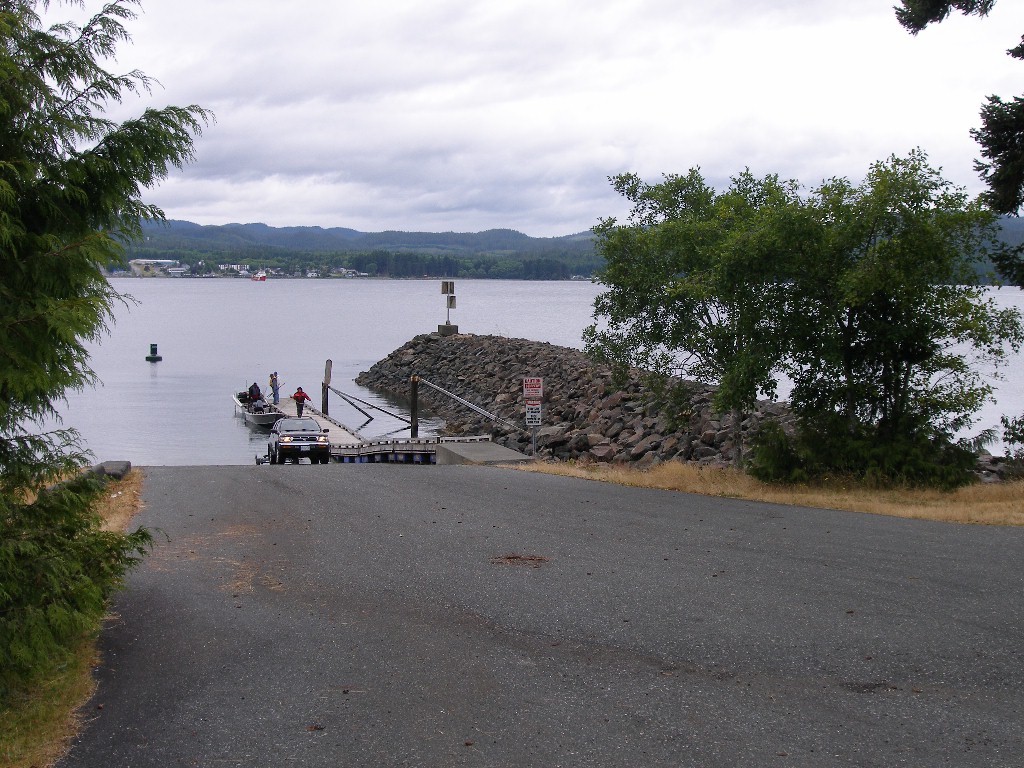
Bear Cove in Port Hardy - the boat launch near the B.C. Government Ferry Terminal
They do remove the dock itself for winter and storms. So, it might not be there all year.
Cephalopods
 |
 |
| Pacific Giant Octopus ~ 9 inches
[22.5 cm] for its head/mantle length. It is reaching up to my camera and feeling it. It only touched my camera for less than a minute before pulling its arm back. [Oct 2009] |
Pacific Giant Octopus ~ 9 inches
[22.5 cm] for its head/mantle length. So, quiet a young one, but clearly a PGO. [Oct 2009] |
| |
|
| A short video of the Pacific
Giant Octopus above, just breathing. Quite heavily. |
Crustaceans
 |
 |
| Northern Kelp Crab ~ 8 inches
[20 cm] wide for the arms. (July 8, 2006) |
Sharp Nosed Crab [?] ~ 6 inches
[15
cm] wide with the legs. (July 8, 2006) |
 |
 |
| Helmet Crab ~ 6 inches [15 cm]
wide with legs. Even though I have seen them in the past at this dive site, I was not able to take a picture. |
Red Rock Crab ~ 4 inches [10 cm]
wide across the face. Often I find them partially buried as this one is. Possibly to hide from potential predators. |
 |
 |
| Decorator Crab ~ 6 inches
[15 cm] tall. This one was quite well camoflauged. [Oct 2009] |
Not sure if this is a Longhorn
Decorator Crab. Or just a regular one. ~ 10 inches [25 cm] wide. [Oct 2009] |
 |
 |
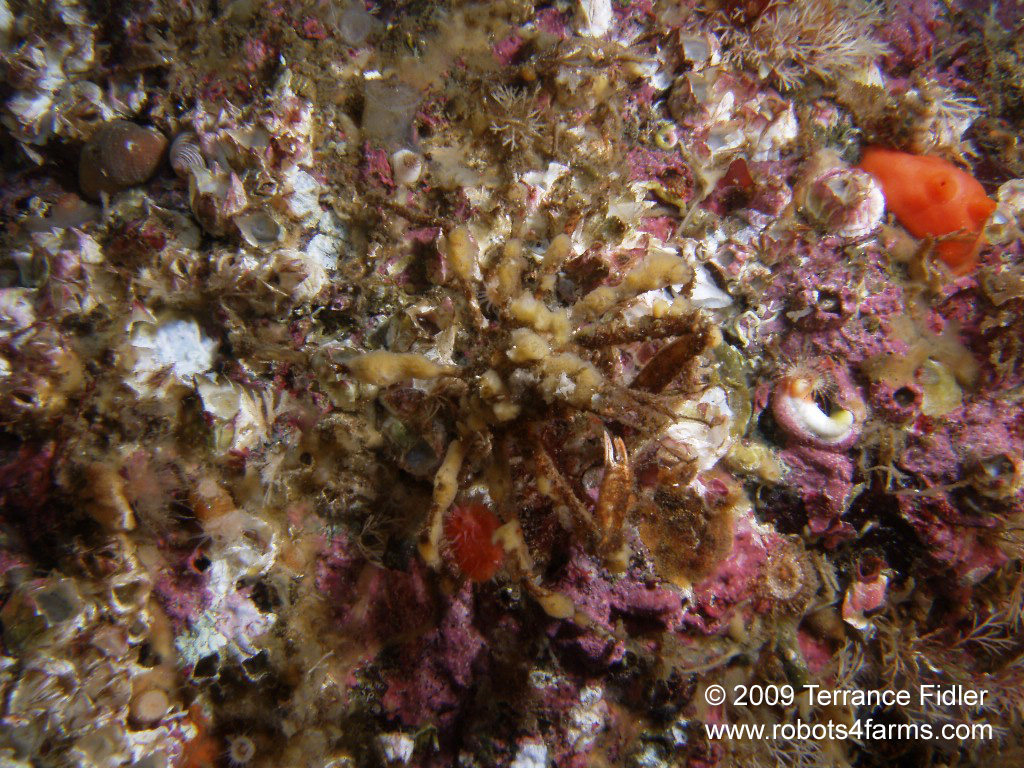
| Moss Crab ~ 4 inches [10 cm]
wide. Note the small Barnacle Eating Dorid just below it. These nudibranchs appeared to be larger than what are written up in my books on marine life. [Oct 2009] |
Red Rock Crab ~ 4 inches [10 cm]
wide. Hiding under a White Spotted Rose Anemone. [Oct 2009] |
 |
 |
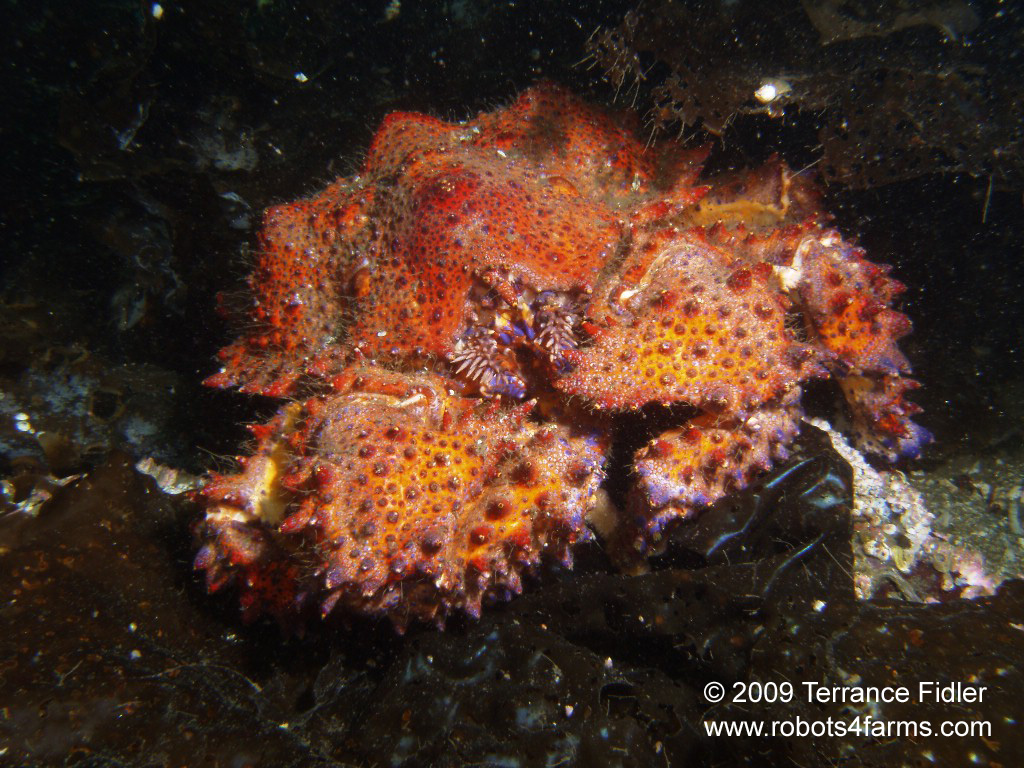
| Puget Sound King Crab ~ 16
inches [40 cm] wide. Note that this one is missing a couple of his back legs on its right side. [Oct 2009] |
Puget Sound King Crab - just a close up of its face. [Oct 2009] |
|
|
If
you like these
pages, and wish this web site to continue, please
remember to check out some of the Google Ads.
Just clicking on the ads helps pay for the web site, and need to earn a few more dollars a month to pay for the web space.
Back to top.Just clicking on the ads helps pay for the web site, and need to earn a few more dollars a month to pay for the web space.
Fish
 |
 |
| Irish Lord ~ about 16 inches [40
cm] long. This fish is more pink in color than I normally see them. [Note that I removed the previous Irish Lord digital image that was here due to its poor quality]. I took a few pictures of this one. [Oct 2009] |
Irish Lord ~ 12 inches [30 cm]
long. I nearly missed seeing this fish, but I was so close that all of a sudden I spotted its eyes. [Previous image was removed due to its poor quality.] [Oct 2009] |
 |
 |
| Goby of some kind ~ about 4 inches [10 cm] long. ( July 8, 2006) | Goby of some kind ~ 8 inches [20 cm] long. ( July 8, 2006) |
 |
 |
| Quillback Rockfish ~ 12 inches [30 cm] long. ( July 8, 2006) | Copper Rockfish ~ 12 inches [30
cm] long. (July 8, 2006) |
 |
 |
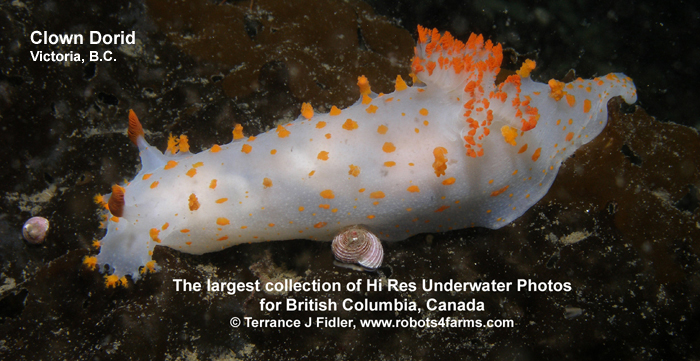
| Quillback Rockfish ~ 8 inches
[20cm] long and Clown
Dorid (July 8, 2006) |
Buffalo Sculpin ~ 16 inches [40
cm] long. They seem to be fairly common here. [Oct 2008] |
 |
 |
| Sailfin Sculpin ~ 8 inches [20
cm] long. These fish are not that common from what I've seen at this site. [Oct 2008] |
Sailfin Sculpin - a baby ~ 3
inches [7.5 cm]. This is the only baby fish of this kind that I have ever seen. I even tried to take a video, but then realized the video lights were almost dead. And of course the fish stopped moving, while only a few seconds earlier its main dorsal fin was undulating. [Oct 2008] |
 |
 |
| Whitespotted Greenling ~ 14
inches [35 cm] long. This is one of the first times I've ever seen one of these fish. And in the photo below you can see what appears to be its eggs. It seemed to be protecting them, as it was not afraid of me. |
Whitespotted Greenling - close up of the fish to the left of this image. [Oct 2008] |
 |
 |
| Eggs found near the Whitespotted
Greenling. Note the transparent tunicate located just left and up from the center of this image. [Oct 2008] |
Sea Perch ~ 5 inches [12.5 cm]
long. There were several of these fish that seem to be following me during this night dive. [Oct 2008] |
 |
|
| Vermilion Rockfish ~ 10 inches
[25 cm] long. They were quite common here during this set of dives, but were hard to take a decent still digital image of one. Probably because of the noise I make when I breath out. [Oct 2009] |
A youtube video of a Ratfish or
Chimaera just swimming around. I was suprised that it did not swim away right away as these fish are usually quite shy and timid. They are related to sharks. |
| |
|
| Chimaera aka Ratfish aka Ghost
Shark video. Just
one swimming around in Bear Cove. I could not get a digital still image as the water quality turned poor on the second dive due to the current picking up. |
This video shows a school of
both Black Rockfish and Yellow Tail Rockfish swimming together. |
| |
|
| This is a short video that shows
a group of English Sole fish who followed me around on my first dive of the day. I have encountered other groups of sole fish as well who were really friendly. Once at Whyte Cliffe park I had a group of around 30 fish, yes 30 you were all around me but would not stay still for a digital still image. Did not think of doing video back then. Doh. |
Back to top.
Mollusks
 |
|
| Rock Scallop ~ 12 inches [30 cm]
wide. I spotted a few of these mollusks at this scuba diving site. [Oct 2009] |
Nudibranchs ( Sea Slugs ) and Snails
 |
 |
| Clown Dorid ~ about 6 inches [15 cm] long ( July 8, 2006) | Clown Dorid ( July 8, 2006) |
 |
 |
| Opalescent Nudibranch on Lettuce
Kelp. ( July 8,
2006) This image also appears on the ocean-life calendar 2009 for Mollusks Life of the Pacific Northwest. North America 2009 Calendar v01 |
Opalescent Nudibranchs ~ each
about 2 inches [5 cm] long. When I came up to them they appeared to be using thier orange appendages to fight each other. But once they sensed me they stoppped fighting and separated. ( July 8, 2006) |
 |
 |
| Giant Dendronotid ~ 10 inches
[25 cm] long. These are very common here. (July 8, 2006) |
Spotted Aglaja, a
nudibranch about an inch [2.5 cm] long (July 8, 2006) |
 |
 |
| Striped Dogwinkles - a type of
snail. Very common along the break water of this boat launch. ~ 1.5 inches [3.75 cm] long. (July 8, 2006) |
Two Hairy Tritons laying eggs -
about 5 inches in length (July 8, 2006) |
 |
 |
| Hoooded Nudibranch. ~ 5 inch
[12.5 cm] wide mouth. Notice the one on the far right and that its mouth is open. I think they should have called these the Venus Fly Trap Nudibranch. Note that these animals only show up here in the fall to breed. |
Same group of Hooded Nudibranchs
as the photograph to the left. But now notice the closed mouth of the nudibranch on the far right. Cycle time to open and close was as short as around 4 to 7 seconds. Others seems to keep their mouths open. |
 |
 |
| Top view of a Hooded Nudibranch.
Clearly shows more details about their bodies, including their rhinophores - the horn-like projections. Note that these animals only show up in the fall to breed. |
Lemon Dorid ~ 8 inches [20 cm]
long. This has to be the largest one I have ever seen. The Noble Sea Lemons are larger, but these ones usually are less than six inches [15 cm] long. I spotted a couple of them on these two dives. [Oct 2009] |
 |
 |
| Frosted Nudibranch [aka White
Lined Dirona] ~ 5 inches [12.5 cm] long. [Oct 2009] |
Frosted Nudibranch ~ 4 inches [10 cm] across. [Oct 2009] |
 |
 |
| Giant Dendronotid ~ 12 inches
[30 cm] long. In the upper left hand of this digital image is a normal coloured one. Mostly whites and grays. I had never seen one so orange like this before. [Oct 2009] |
Giant Dendronotid ~ 16 inches
[40 cm] long. A less common color but I have seen one this color before. [Oct 2009] |
 |
|
| Gold Dirona ~ 3 inches [7.5 cm]
long. This is the only one that I have seen here. [Oct 2009] |
This video shows how a Giant
Dedronotid moves around. It only moves a couple inches, and the Sole Fish that had been following me around on this dive make their appearance. |
 |
 |
| Barnacle Eating Dorids ~ 2
inches [5 cm] long. Near some Hooded Nudibranchs. [Oct 2009] |
Barnacle Eating Dorids ~ 2 inches [5 cm] long. [Oct 2009] |
 |
 |
| Red Dendronotid ~ 10 inches [25
cm] long. This is the only example of this type of nudibranch that I have seen here. [Oct 2009] |
Leopard Dorid ~ 5 inches [12.5
cm] long. I spotted a couple of these nudibranchs on this dive. [Oct 2009] |
Back to top.
Sea Anemones & Jellyfish ( Cnidarians )
 |
 |
| Sand Rose Anemone ~ 6 inches [15 cm] ( July 8, 2006) | Buried Anemone ~ 8 inches [20 cm] ( July 8, 2006) |
 |
 |
| Sand Rose Anemone ~ 12 inches [30 cm] (July 8, 2006) | White Spotted Rose Anemone ~ 16 inches [40 cm] wide. ( July 8, 2006) |
 |
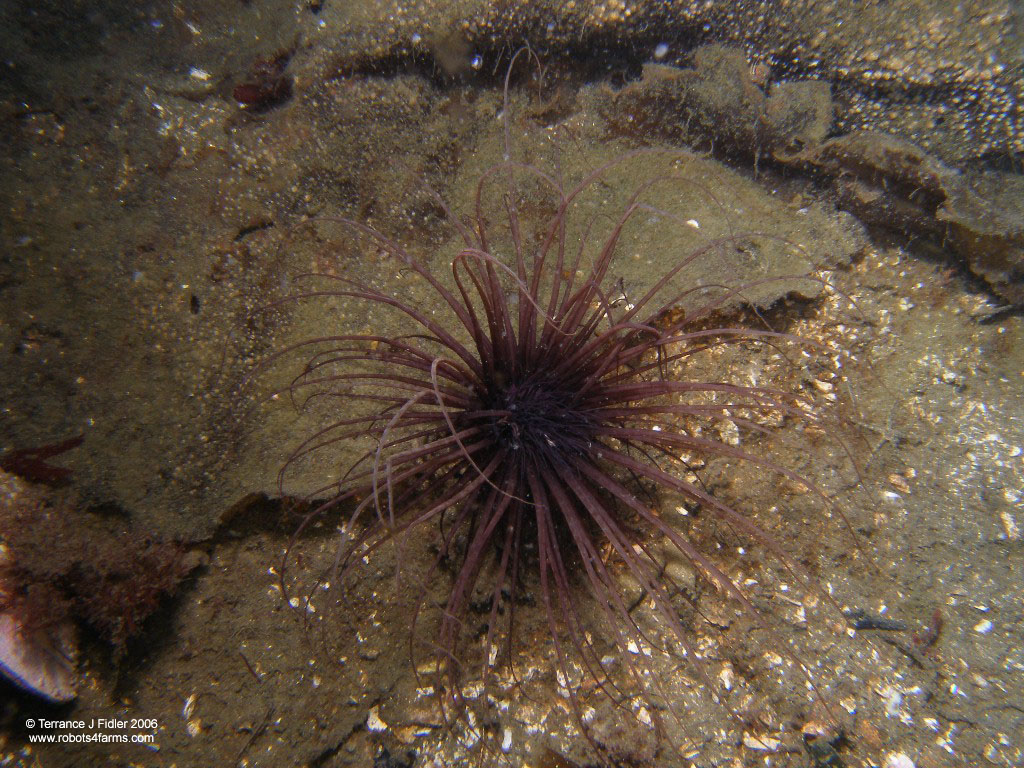 |
| Tube Dwelling Anemone ~ 8 inches
[20 cm] across with arms. (July 8,
2006) |
Tube Dwelling Anemone ~ 8 inches
[20 cm] across with arms. First
time I've seen them with this colour for their bodies. (July 8, 2006) |
 |
 |
| Columbia Sand Anemone ~ 12
inches [30 cm] wide. (July 8,
2006) |
Clinging Jellyfish ~ 2 inches [5
cm] across its bell. (July 8, 2006) |
 |
 |
| Zoanthids ~ 1 inch [2.5 cm] in
diameter. (July 8, 2006) |
Red-Eye Medusa ~ 2 inches [5 cm]
long. (July 8, 2006) |
 |
 |
| White Spotted Rose Anemone ~ 12
inches [30 cm] wide. I've seen a few of these here, and in fact I've seen more of these here than any other dive site I've been to. |
Painted Anemones ~ 10 inches [25 cm] wide each. [Oct 2009] |
Back to top.
Sea Cucumbers & Starfish ( Echinoderms )
 |
 |
| Sea Cucumber (July 8, 2006) | Sunflower Starfish - about 2 feet across (July 8, 2006) |
 |
 |
| Sunflower Star - about 3 feet [1 metre] across ( July 8, 2006) | Sunflower Star - regrown from
fragment? Its arms seem to be of the wrong sizes given the size of the sunflower star - about 10 inches across ( July 8, 2006) |
 |
 |
| Juvenile Sunflower Star - about
6 inches [15 cm] across (July 8,
2006) |
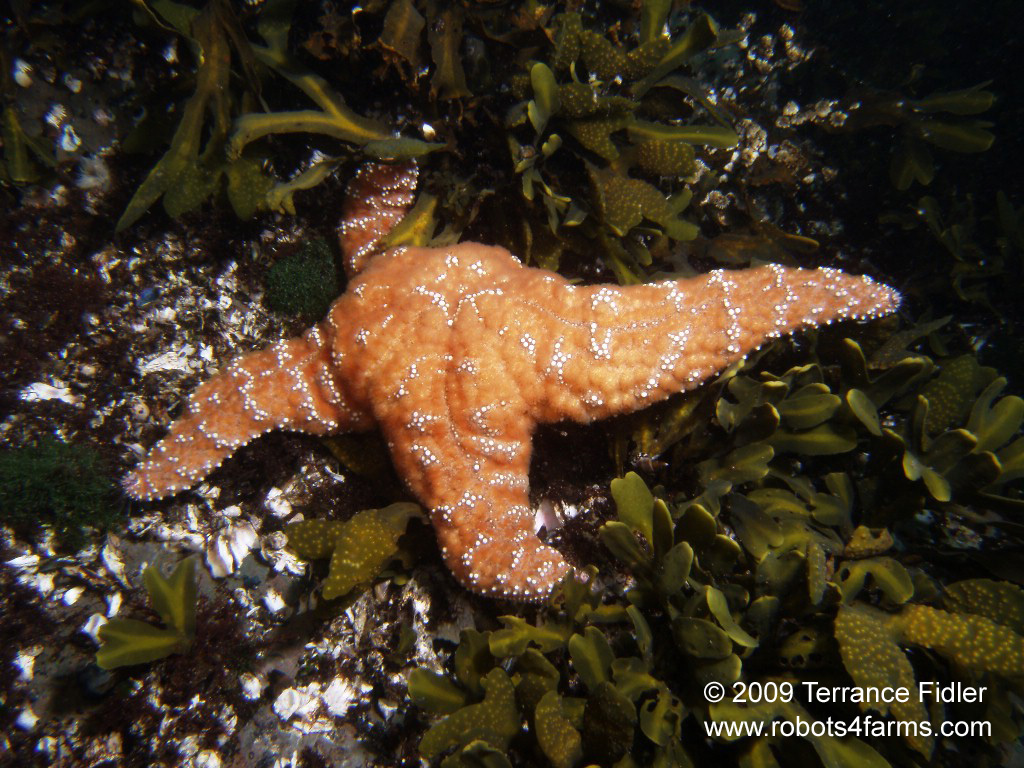
False Ochre Star - about 16
inches [40 cm] across (July 8, 2006) |
 |
 |
| Spiny Pink Star - about 3 feet
across (July 8, 2006) |
Sunflower Star - over 3 feet [1
metre]
across (July 8, 2006) |
 |
 |
| Purple Starfish - about 12
inches [30 cm] across (July 8, 2006) |
Orange and Brown Sea Cucumbers ~
10 inches [25 cm] long.
Depending on the time of year here, I've seen dozens of these fairly close to one another. (July 8, 2006) |
 |
 |
| Painted Star ~ 14 inches [35 cm]
wide. (July 8, 2006) |
Orange Sea Cucumber ~ 8 inches [20 cm] wide. (July 8, 2006) |
 |
 |
| Hybrid of Orange and Brown Sea
Cucumbers ~ 10 inches [25 cm] wide. (July 8, 2006) |
Brown Sea Cucumber ~ 10 inches [25 cm] wide.(July 8, 2006) |
 |
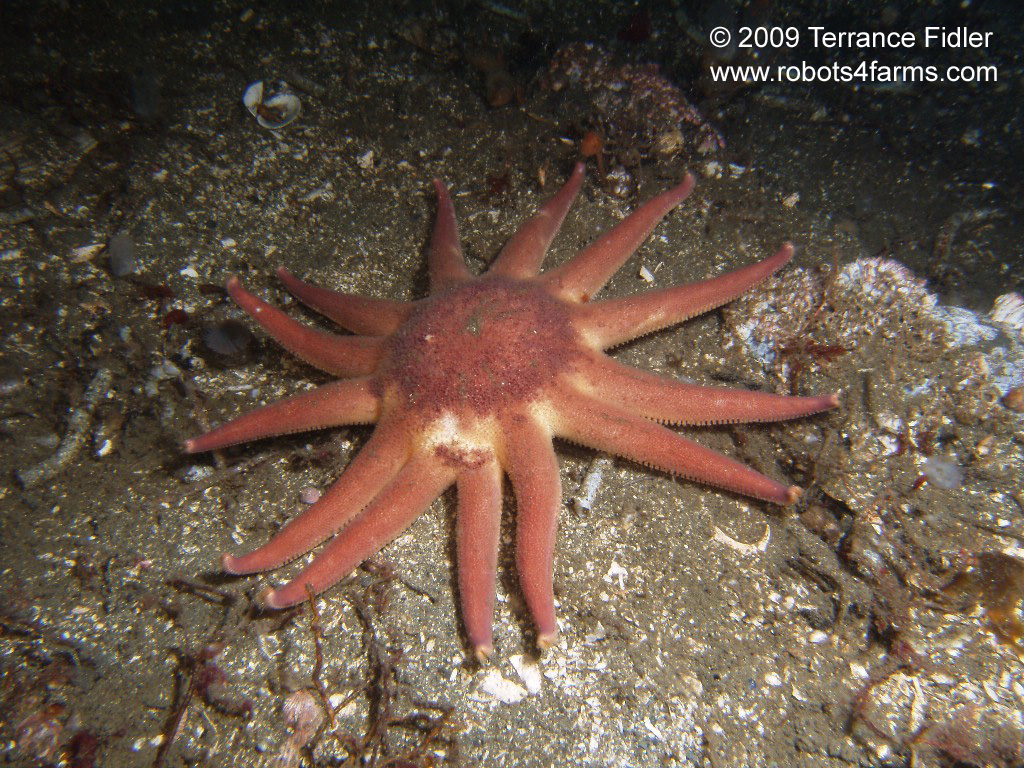 |
| Orange Sunstar ~ 12 inches [30
cm] wide. |
Morning Star ~ 16 inches [40 cm] wide. A fairly common starfish. [Oct 2009] |
 |
 |
| Rose Star ~ 8 inches [20 cm] wide. [Oct 2009] | Striped Sun Star ~ 20 inches [50 cm] wide. [Oct 2009] |
 |
 |
| Spiny Pink Star ~ 18 inches [45
cm] wide. Note the small Slime Tube Worm just below it, and left of its bottom arm. [Oct 2009] |
Purples Starfish ~ 12 inches [30
cm] each. The brown one was one of three colours that were common here at this dive site. [Oct 2009] |
 |
|
| Purple Starfish ~ 12 inches [30
cm] wide. Odd colour but quite common here. [Oct 2009] |
Back to top.
Sponges
|
|
| Velvety Sponge and some tiny
hermit crabs. Also note the Barnacle Eating Dorids. [Oct 2009] |
Tunicates
 |
 |
| Stalked Tunicate ~ 4 inches [10 cm] long. (July 8, 2006) | Stalked Tunicate (July 8, 2006) |
 |
|
| Transparent Tunicate ~ 3 inches
[7.5 cm] Note the little shrimp at their bases, and the Calcareous Tube Worm. |
Back to top.
Miscellaneous
 |
|
| Sea Sacs or Halosaccion glandiforme ~ about 3 inches [7.5 cm] tall. ( July 8, 2006) |
Back to top.
Google Maps: Port Hardy Ferry Terminal
Or
Map Quest: Port Hardy Ferry Terminal